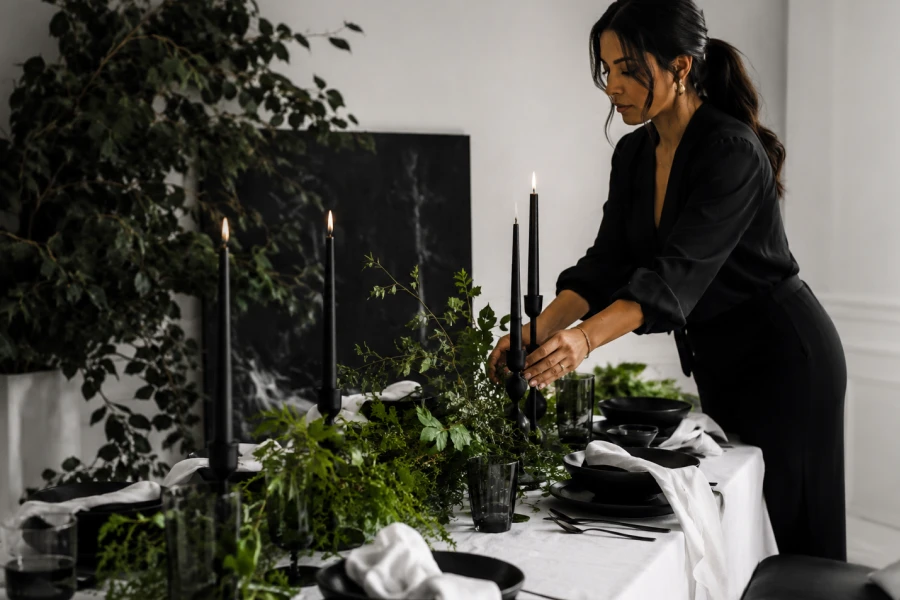
Many hosts want a beautiful setting but do not want decorating to become another stressful task. how to style a table for a party becomes easier when the arrangement begins with comfort. Guests should be able to sit down, enjoy the food, and move naturally around the table. The most successful setup feels prepared without looking overly managed. You do not need a cabinet full of matching pieces to create that effect. Start with what you already use and enjoy. Then add a few deliberate layers that give the surface more personality. Focus on mood before perfection. A relaxed approach will make the room feel more inviting and leave you free to enjoy the gathering too.
Good seating determines whether the table feels welcoming from the beginning. Make sure each chair has enough room to pull out without hitting another guest. Leave space for bags, jackets, and comfortable movement nearby. Consider the flow from the kitchen to the table before adding decorations. A clear path makes serving feel easier throughout the meal. Your dining table mood should support people rather than turn them into part of a display. Keep the center of each seat clear for plates and glasses. Use place cards only when they genuinely help the gathering. A comfortable seating plan makes the party feel organized without ever feeling formal.
Materials can establish atmosphere before color ever enters the room. Linen creates softness and movement. Stoneware feels grounded and relaxed. Glass adds lightness, while darker ceramics bring dramatic contrast. Choose two or three materials that suit the feeling you want to create. Then repeat them in small ways across the table. A simple layered place settings approach makes ordinary items look more complete. Pair a woven placemat with a smooth plate. Add a folded napkin that introduces a softer texture. Let the materials feel different enough to create interest. Their contrast will make the table feel richer without requiring many extra objects.
Layers work best when each one adds comfort or visual value. Begin with a base, such as a tablecloth, runner, or placemat. Add dinnerware that suits the food you plan to serve. Then use napkins, small bowls, or a simple botanical detail to finish the place setting. Avoid stacking items that guests will immediately need to move. A refined party table styling plan never asks guests to unpack their own seat. Keep the tallest pieces toward the center. Use lower textures near the edges. Let every layer feel easy to touch and use. That combination of beauty and practicality creates a table guests can truly relax around.
Hosts see a table differently because they understand what will happen after guests arrive. Food will appear, glasses will move, and conversation will become more animated. Design with those changes in mind. Choose decorations that can shift easily when serving begins. Keep a nearby console or sideboard available for extra items. Avoid placing delicate objects where hands will constantly reach. A practical functional table design gives you room to adapt during the evening. Let the table look beautiful at the start, but keep it prepared for real use. This mindset removes pressure from every decorative choice. It also makes hosting feel much more natural and generous.
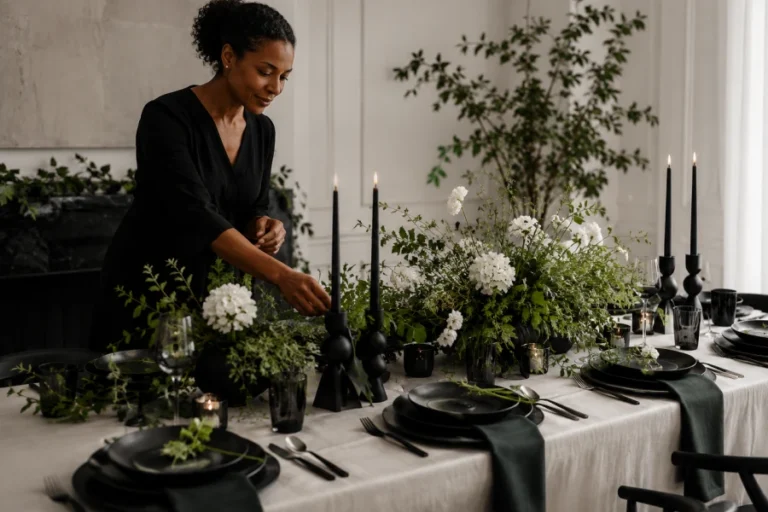
Empty space is not unfinished space. It is what gives a table room to breathe and lets each detail feel intentional. Avoid filling every inch with candles, flowers, or decorative objects. Instead, choose one central idea and let it guide the arrangement. A loose line of greenery can create more impact than a crowded centerpiece. A few matching candleholders can carry the entire mood. Your elegant dining atmosphere will feel stronger when the surface stays edited. Keep the conversation area clear. Leave space for serving dishes and hands reaching across the table. A lighter arrangement often feels more luxurious than a complicated one.
The most useful party setup can change with the season and guest list. Keep a reliable foundation of simple plates, napkins, and glassware. Refresh it with one new accent for each occasion. Fresh herbs can work for a casual supper. Branches and candles can add drama to an evening meal. Bright fruit can make a daytime gathering feel celebratory. Notice which combinations feel natural in your own home. Photograph successful arrangements for future reference. Store your favorite pieces together so they are easy to reach. Over time, the setup becomes a personal hosting rhythm. That familiarity helps every party feel more relaxed, polished, and distinctly your own.

Leave a comment